Reading time: approx. 7 minutes
Live events, online events and hybrid events
Live events, online events and hybrid events – a new way of thinking is needed – Smart live communication in the ‘new normal’
The coronavirus pandemic has hit the live communications sector harder than almost any other industry. Solutions that had worked perfectly for decades were effectively rendered obsolete overnight. What sounds like a disaster at first glance is, however, proving to be a major opportunity for the future of the industry. Carsten Knieriem, Managing Director and founder of what when why® – Emotion Engineering, is convinced of this:
Provided the right conclusions are drawn, existing opportunities are used creatively and the development of new, innovative solutions is driven forward.
Those who do not communicate lose their connection with people
The fact that the consequences of the coronavirus pandemic have hit live communication so hard comes as no surprise to Carsten Knieriem. After all, there is no substitute for real-life encounters. As ‘social beings’, humans thrive on the fulfilment of important basic psychological needs. The sense of cohesion, strength, belonging, security and self-esteem is strengthened and fostered many times over through direct social interaction than when sitting alone in front of a screen.
The challenge lies in creating online experiences that move, engage and involve people emotionally.
People’s basic need for belonging, communication and security has not changed during the Covid-19 pandemic. In times of social distancing, this need has actually grown – emotions become particularly significant when we are apart. Especially in uncertain times, it is important to create perspectives. This can only be achieved through good and continuous communication. “Those who provide guidance become relevant,” says Knieriem, adding: “Participants in digital or hybrid events, in particular, want to be noticed, to feel part of a larger whole and to be able to actively shape the topics.
Video conferences are not digital events
Countless video conferences via Microsoft Teams, Zoom, WebEx or Big Blue Button prove that video conferences are efficient, digital work platforms. They are no substitute for professionally designed online events or hybrid events.
The digital filter limits important sensory perceptions. The emotional elements are missing. There is a lack of grandeur and charisma.
In short: video conferences lack anything that stirs the emotions. But people need both: the factual dimension as well as the emotional dimension. The special power lies in the skilful combination of both dimensions.
The major challenge for the industry is therefore to activate people’s fundamental social needs through digital or hybrid formats as well. Turning participants into active contributors is the formula for success here too. The goal: “Motivation, identification, commitment. And: getting participants to TAKE ACTION”
The key questions are: How can the achievements of live communication be transferred to the digital world, to online events? How can the combination of online and on-site events create even greater impact? How can the diverse possibilities of online communication be utilised to provide guidance and create perspective in a systematic way that adds value?
First mover in online and hybrid events
A new way of thinking is needed, and new solutions are already proving highly successful. “There’s a real sense of optimism here. It’s brilliant! As thought leaders in the field of 360-degree communication, we have long been using the possibilities of digitally supported communication to create a comprehensive communicative experience with added value. This made it comparatively easy for us to consistently align our agency with the requirements for successful communication in the ‘New Normal’,” says Knieriem.
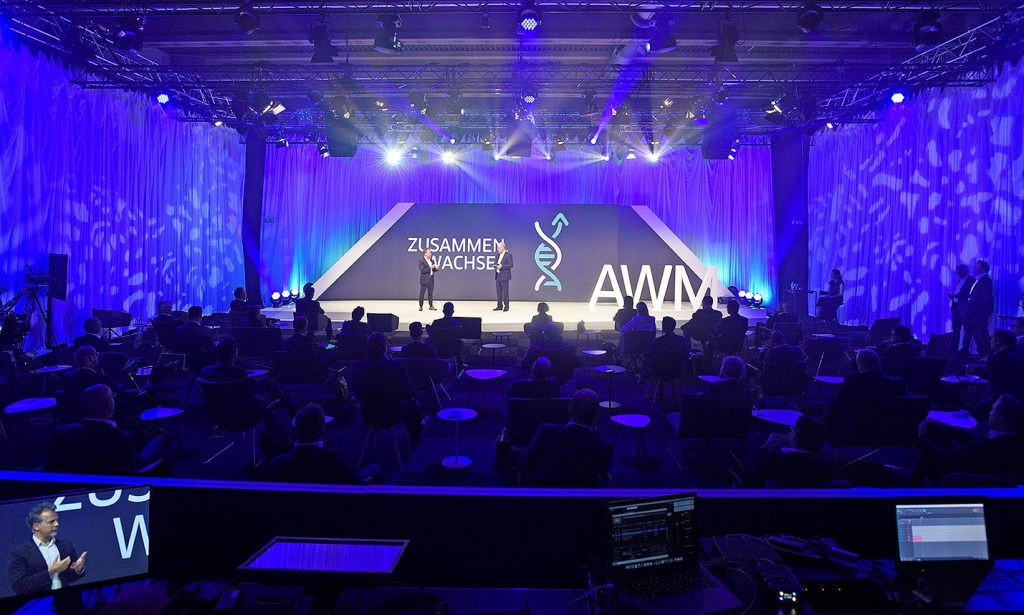
No wonder, as what when why was already a first mover in the field of online and hybrid events worldwide even before the pandemic. Communication concepts are consistently structured in such a way that events are supported by seamless pre- and post-event communication.
And the right tools have also been available for a long time. “We have been working continuously with our partners for years to extend the impact of live communication,” says what when why Managing Director Knieriem. “The use of event and community apps, streaming, and the temporary engagement of target groups via online participation have long provided intelligent, attractive and cost-effective communication solutions, even before the restrictions of the pandemic.”
The future of live communication: smart events
The time has come: it lies in combining the advantages and possibilities of online communication with the unique strengths of live communication. Digitalisation means that communication can become more comprehensive, up-to-date, transparent and even more engaging.
“In future, we will need to offer participants specially tailored formats and a wide range of opportunities for interaction and engagement,” says Knieriem. Live events will continue to play a significant role in this regard. Knieriem sees further growth potential in this area. “Companies will invest even more in these formats in future – but will be much more selective in choosing the events,” says Knieriem. Live events will then serve as flagship events.
“In the age of the ‘New Normal’, communication concepts – which enable the connection of online and onsite, of live and digital, and of interconnected, mutually reinforcing communication channels (360-degree communication) – will provide forward-looking answers to the pressing questions regarding effective, emotional and sustainable communication, as well as the future of the industry.
The future has already begun, and the events industry is currently at the very start of an extremely exciting development. The coronavirus crisis has torn large holes in the invisible yet seemingly insurmountable barrier that previously existed between the analogue and digital worlds. This has opened up a view of a completely new, enticing universe.
“If we combine both worlds, fully exploit their respective strengths and extend the physical space to encompass the digital, a world of almost unlimited possibilities opens up. Welcome to the new world of ‘Smart Events’,” says Knieriem about the decidedly hybrid future of his industry.